
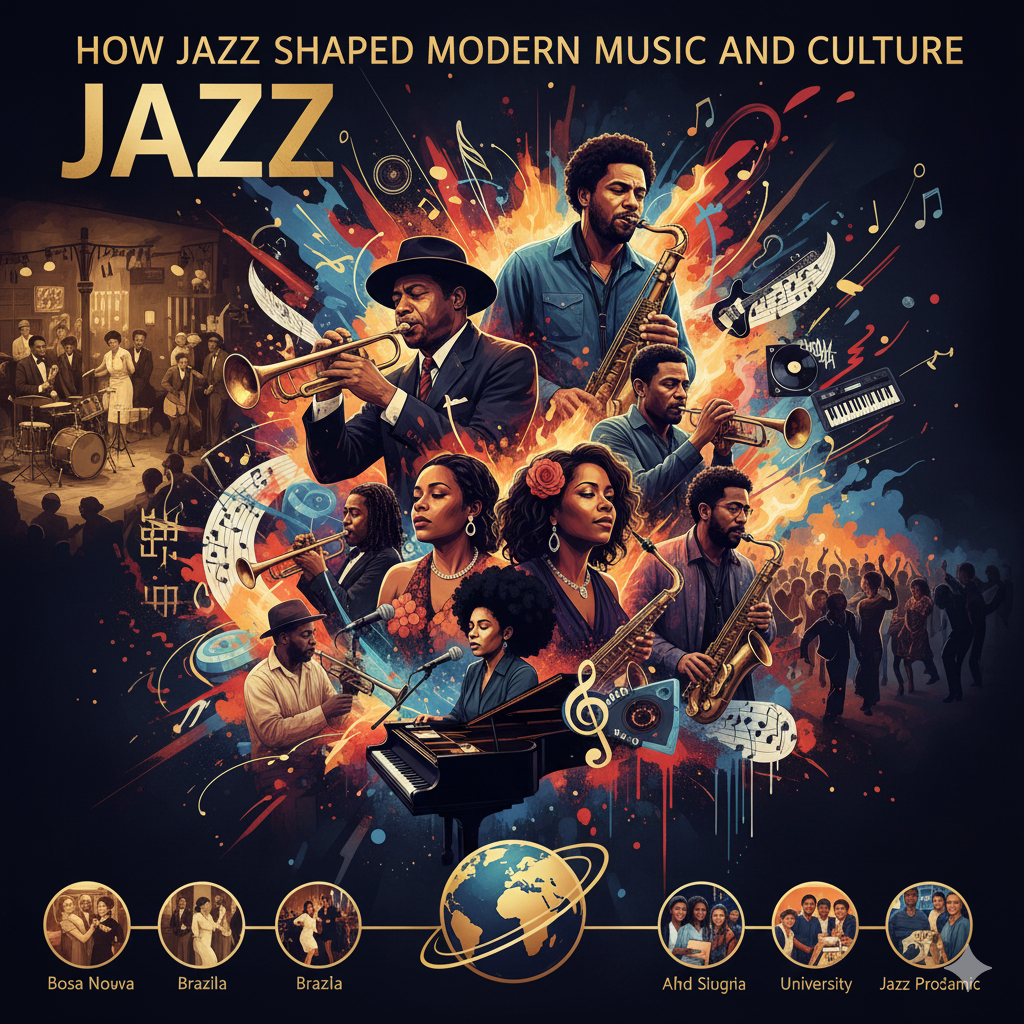
Jazz, a genre born in the early 20th century, has played a pivotal role in shaping modern music and culture. Its influence extends far beyond simply creating a new musical style; it has impacted various aspects of society, including art, fashion, politics, and social movements. Here are some key ways in which jazz has shaped modern music and culture:
1. Musical Innovation
- Improvisation: Jazz is characterized by its emphasis on improvisation, allowing musicians to express individuality and creativity. This practice has been adopted in various genres, including rock, hip-hop, and contemporary classical music.
- Chord Progressions and Rhythms: Jazz introduced complex chord progressions and syncopated rhythms that influenced other genres. Rock and pop music, for example, often borrow from jazz harmonies and forms.
- Fusion Genres: Jazz has been a foundational element in the creation of numerous sub-genres, including jazz fusion, which blends jazz with rock, funk, and other styles, significantly altering the musical landscape.
2. Cultural Exchange
- Integration of Influences: Jazz originated from a mix of African, European, and Caribbean musical traditions. This blending underscores the importance of cultural exchange in music and has paved the way for the integration of diverse musical styles.
- Global Impact: Jazz has transcended American borders, influencing musicians around the world. Genres like bossa nova in Brazil and Afrobeat in Nigeria illustrate how jazz can be adapted to fit different cultural contexts.
3. Social and Political Movements
- Civil Rights Movement: Jazz became an emblem of resistance and expression during the Civil Rights Movement, with artists like Louis Armstrong, Billie Holiday, and John Coltrane using their music to address social injustices and advocate for change.
- Cultural Identity: Jazz has served as a powerful expression of African American identity and culture, highlighting the experiences of marginalized communities and contributing to discussions around race and equality.
4. Artistic Collaboration
- Interdisciplinary Connections: Jazz has fostered collaboration between musicians and artists from various disciplines, including literature, visual arts, and dance. The Beat Generation, for instance, drew heavily from jazz rhythms and spontaneity, intertwining it with poetry and prose.
- Film and Media: Jazz has significantly impacted film soundtracks and popular music, influencing how stories are told and experienced, further integrating music into the cultural fabric.
5. Fashion and Lifestyle
- Cultural Iconography: Jazz musicians have often set trends in fashion, from the sharp suits of the big band era to the bohemian styles of bebop artists. Their influence extended into popular fashion, shaping how styles are perceived and adopted.
- Nightlife and Entertainment: The jazz scene contributed to the rise of nightlife culture, with jazz clubs becoming social hubs where people gathered, danced, and celebrated, promoting a sense of community.
6. Continued Evolution
- Contemporary Jazz: Today, jazz continues to evolve, incorporating elements from modern genres such as electronic music, hip-hop, and indie rock. Artists like Kamasi Washington and Esperanza Spalding reflect the genre’s adaptability and ongoing relevance.
- Jazz Education: The establishment of jazz studies programs in universities and conservatories worldwide has ensured the preservation and evolution of jazz while inspiring new generations of musicians.
In summary, jazz has profoundly influenced modern music and culture, serving as a catalyst for creativity, social change, and cultural exchange. Its legacy continues to inspire artists and shape the soundscape of contemporary music across the globe.
About The Author
