
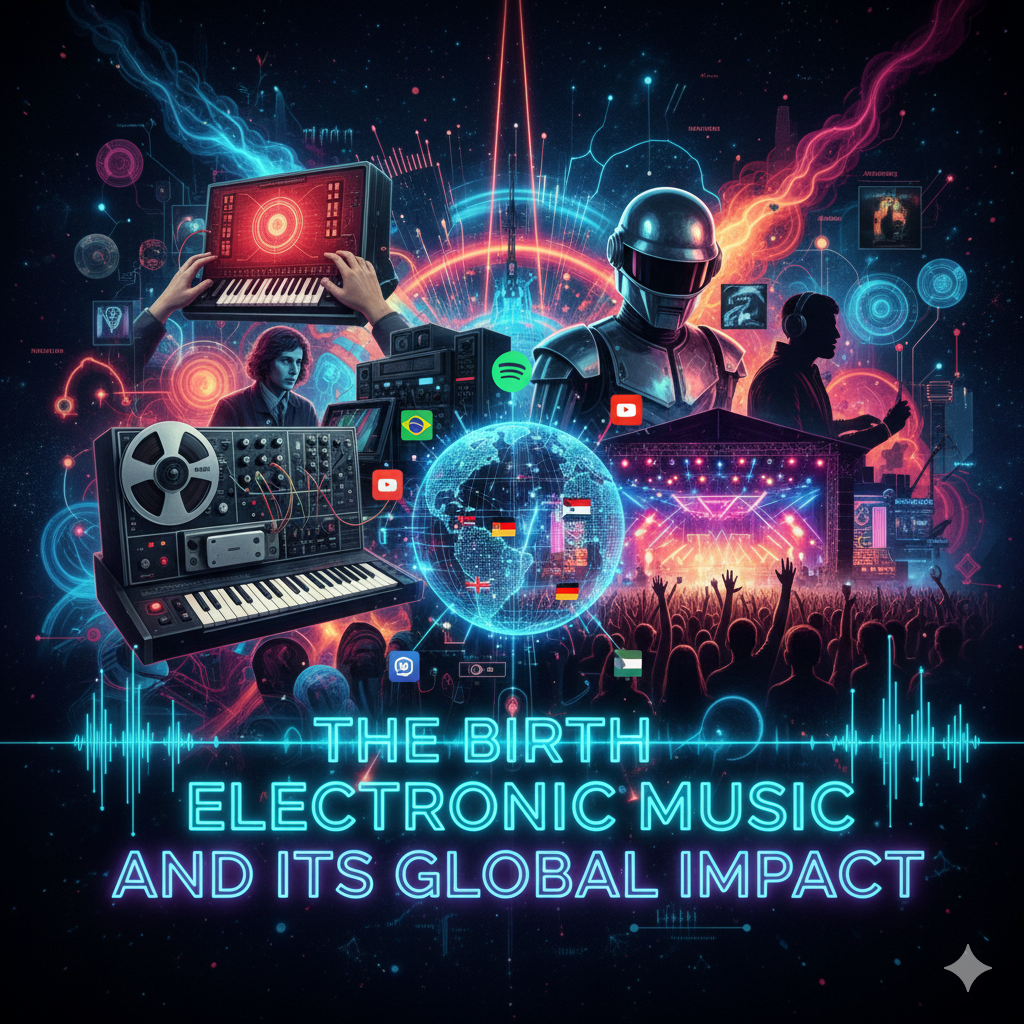
The birth of electronic music traces back to the mid-20th century, emerging from the convergence of technology, experimental sound art, and the avant-garde movements in music. Here’s a brief overview of its history and global impact:
Early Development (1920s–1940s)
- Pioneering Instruments: The origins of electronic music can be credited to early experiments with electrical sound generation. Instruments like the Theremin (1920) and the Ondes Martenot (1928) allowed composers to explore new sonic possibilities.
- Musique Concrète: Originating in France in the late 1940s, this technique involves manipulating recorded sounds (including everyday noises) to create compositions. Pierre Schaeffer was a key figure in this movement.
- Electronic Composition: Around the same time, composers like John Cage and Karlheinz Stockhausen began experimenting with electronic sounds and tape music, pushing the boundaries of traditional music.
Growth and Popularization (1950s–1970s)
- Synthesizers: The 1960s saw the development of synthesizers. The Moog synthesizer, released in 1964, became iconic and was used by artists such as Wendy Carlos, whose album Switched-On Bach brought electronic music into mainstream consciousness.
- Psychedelic Rock and Avant-Garde: Bands like The Beatles and Pink Floyd incorporated electronic elements into their music, influencing popular genres and helping to introduce electronic sounds to wider audiences.
- Early Electronic Genres: The 1970s saw the birth of genres such as krautrock (e.g., Kraftwerk), disco with synthesizers, and the early stages of ambient music (e.g., Brian Eno).
The Rise of New Genres (1980s–1990s)
- Dance Music Revolution: The 1980s saw the emergence of electronic dance music (EDM) genres like house, techno, and electro. Cities like Chicago, Detroit, and Berlin became hubs for innovation in electronic music.
- Global Influence: As technology advanced, synthesizers became more affordable, leading to a surge in DIY music production. The accessibility of drum machines and samplers democratized music creation, enabling diverse artists worldwide to innovate.
- Hip-Hop and Electronic Fusion: The melding of electronic sounds with hip-hop in the 1980s and 1990s also played a significant role in the evolution of the genre, exemplified by artists such as Afrika Bambaataa and groups like Kraftwerk.
Integration and Mainstream Acceptance (2000s–Present)
- Mainstream Breakthrough: By the 2000s, electronic music had permeated mainstream pop, with artists like Daft Punk, Lady Gaga, and Calvin Harris achieving significant chart success.
- Explosion of Subgenres: The rise of the internet and digital production tools led to an explosion of subgenres within electronic music, including dubstep, trap, and future bass. Festivals such as Coachella and Tomorrowland celebrated this diversity.
- Cultural Impact: Today, electronic music influences a vast array of musical landscapes and is integral to various cultural movements. It has transcended geographic boundaries, with regional scenes thriving globally, from K-Pop incorporating EDM elements to the vibrant electronic scenes emerging in Africa and South America.
Global Impact
- Cultural Exchange: Electronic music fosters cross-cultural collaboration, blending traditional sounds with modern technology, leading to new genres and styles.
- Industrial and Economic Growth: The electronic music industry, including festivals and club scenes, has become a significant economic force, contributing to tourism and local economies worldwide.
- Technological Advancements: The electronic music movement drove innovations in music technology, influencing everything from recording techniques to live performances, and paving the way for future developments in music production software.
- Social Movements and Activism: Electronic music often serves as a platform for social and political messages, contributing to movements around issues like climate change, social justice, and mental health awareness.
In conclusion, the birth of electronic music marked a revolutionary shift in cultures and societies across the globe. It has transformed how we create, listen to, and interact with music, influencing countless genres and fostering global connections through sound. This ongoing evolution continues to inspire new generations of artists and listeners alike.
About The Author
