
Music technology has significantly transformed the recording industry over the decades, bringing about revolutionary changes that have redefined how music is created, produced, and consumed. Here are some key ways in which music technology has changed recording forever:
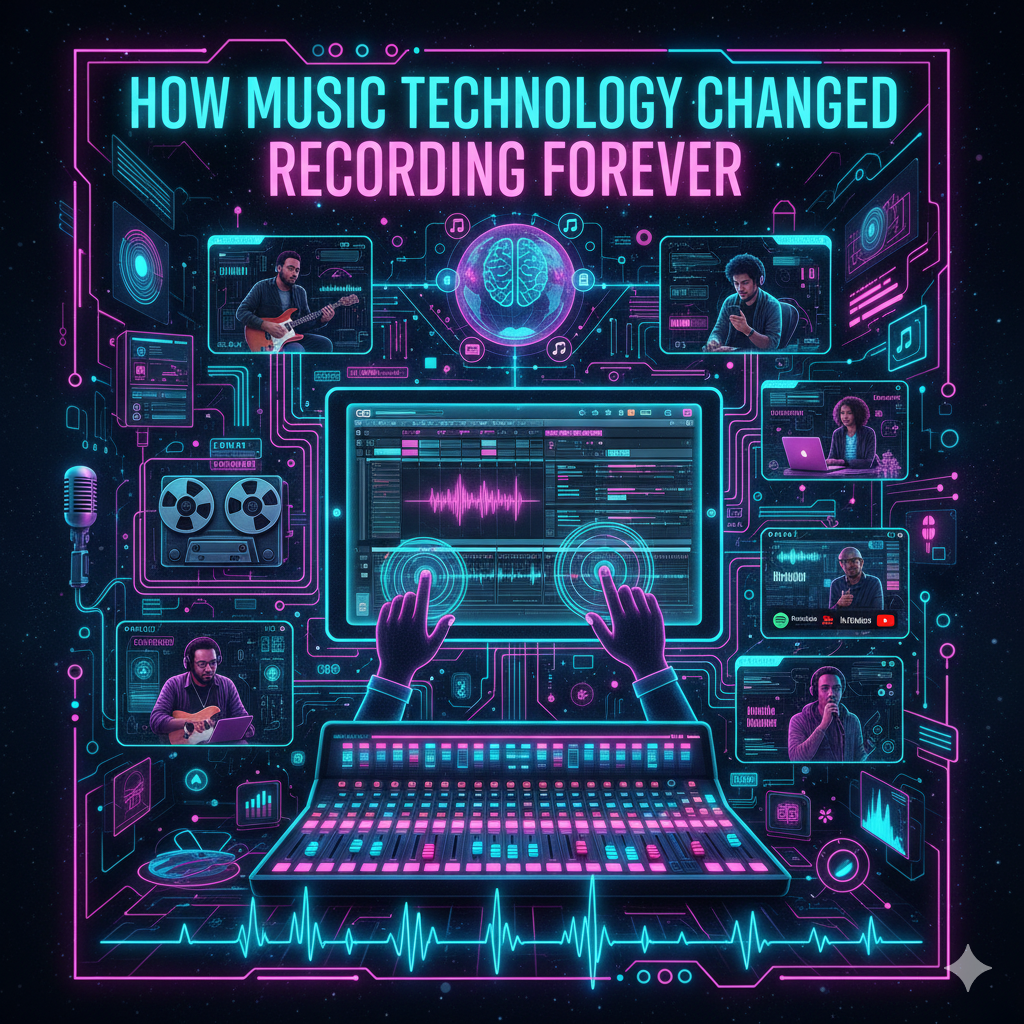
1. Digital Recording
The shift from analog to digital recording marked a major turning point in the industry. Digital audio workstations (DAWs) such as Pro Tools, Logic Pro, and Ableton Live allow musicians and producers to record, edit, and mix with unprecedented precision and flexibility. Digital recording has also made it easier to manipulate sound through effects and production techniques.
2. Home Recording
Advancements in technology have made it possible for individuals to record high-quality music from home. Affordable software, along with accessible hardware like USB microphones and audio interfaces, has democratized music production, allowing aspiring artists to create and distribute their music without needing a professional studio.
3. Sampling and Looping
The integration of sampling technology has allowed musicians to incorporate pre-recorded sounds into their work. Samplers and software instruments enable a wide array of musical styles and creative possibilities. Looping technology also permits artists to create complex arrangements and textures without needing a full band.
4. MIDI and Automation
Musical Instrument Digital Interface (MIDI) technology has transformed the way music is composed and recorded. Musicians can connect electronic instruments to computers, enabling the easy manipulation of notes, dynamics, and timing. Automation features in DAWs allow for precise control over various parameters, such as volume and effects, enhancing the overall production quality.
5. Remote Collaboration
Music technology has enabled artists to collaborate from different locations worldwide. Online platforms, cloud storage, and file-sharing services allow musicians and producers to work together easily, regardless of geography. This has led to the emergence of virtual bands and remote sessions, breaking down traditional barriers in the music industry.
6. Mobile Recording
The proliferation of smartphones and portable recording devices has made it possible to capture high-quality audio anywhere. Musicians can now record ideas on the go, leading to more spontaneous and diverse creative outputs. Mobile apps also provide musicians with tools for mixing and editing on the move.
7. Audio Effects and Production Techniques
The development of advanced audio effects has expanded the palette for producers. Plugins that emulate vintage gear, create complex soundscapes, or push the boundaries of traditional music production have led to new genres and styles. Effects like reverb, delay, and distortion can now be manipulated in novel ways, allowing for innovative sound design.
8. Distribution and Access
The rise of digital distribution platforms such as Spotify, Apple Music, and Bandcamp has changed how music is consumed and monetized. Artists can reach global audiences without traditional gatekeepers, and consumers enjoy immediate access to an extensive catalog of music. This has shifted the economics of the industry and allowed for more diverse voices in music.
9. Artificial Intelligence (AI)
Emerging technologies involving AI are starting to play a role in music production. From AI-assisted composition tools to automated mixing, these innovations allow for increased efficiency and new creative avenues. While AI in music is still in its infancy, it has the potential to further change how music is created and experienced.
Conclusion
Music technology continues to evolve, influencing every aspect of the recording process. From how music is created to its distribution and consumption, the innovations in this field have integrated and reshaped the landscape of the music industry. As technology advances, it will likely continue to redefine boundaries and create new opportunities for artists and producers alike.
About The Author
