
Beware of Fake “Social Security & Bank Alerts” Scams: How They Work, How to Avoid Them, and What to Do If You’re Targeted
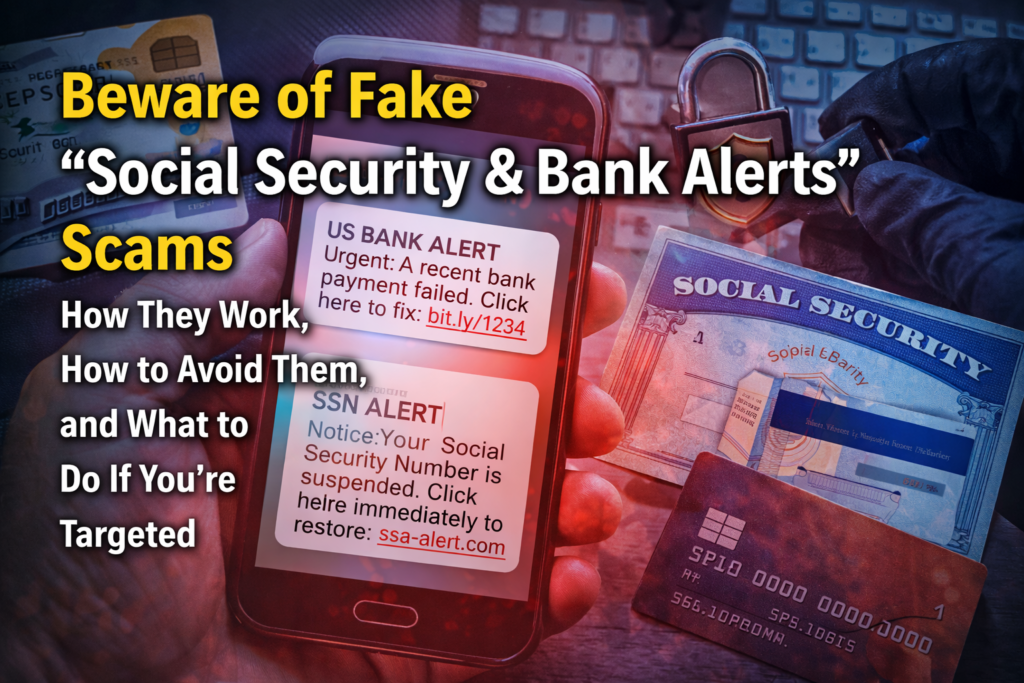
In today’s digital age, scammers are becoming increasingly clever with urgent text messages, emails, and phone calls. These fraudulent alerts often claim there’s a serious problem — like your Social Security Number (SSN) being suspended or a bank payment failing — and try to trick you into clicking a link, calling a number, or sharing sensitive codes or personal data. Understanding how these scams operate, how to avoid them, and what to do if you’re targeted can protect your identity and finances.
📱 How These Scams Work
Scammers impersonate trusted institutions like the Social Security Administration (SSA) or your bank to create a sense of urgency. Common tactics include:
- Fake SSN suspension notices: Messages may claim your Social Security number will be suspended due to criminal activity unless you act immediately. These often include official-looking letterhead or attachments. OIG SSA
- Bogus bank alerts: Fraudulent texts claiming a payment was denied or suspicious activity was detected, urging you to confirm details by clicking a link or calling a phone number.
- Robocalls and texts requesting 2FA codes: Scammers may ask for two-factor authentication (2FA) codes sent to your phone, then use them to take over accounts or authorize transactions.
- Threats or scare tactics: These scams may warn of arrest, fines, or legal consequences unless you pay or act immediately. OIG SSA
These messages often use official-looking logos, spoofed phone numbers, and even fake documents to appear legitimate. However, SSA and real financial institutions will never ask for personal details via unsolicited text or email or demand unusual payments like gift cards, prepaid debit cards, cryptocurrency, or direct transfers. Social Security Matters+1
🛑 Red Flags of a Scam
Watch out for these warning signs:
- Urgency and pressure: Language that insists you must act now or face consequences is a hallmark of fraud. Social Security
- Requests for personal info: Legitimate agencies will not ask for your full SSN, bank details, 2FA codes, or passwords over the phone, email, or text. Social Security Matters
- Suspicious links or attachments: Do not click links or download attachments from unexpected messages. OIG SSA
- Unusual payment methods: Asking for payment by gift cards, cash mail, cryptocurrency, or wire transfer is a scam tactic. Social Security Matters
The Social Security Administration (SSA) and the Office of the Inspector General (OIG) emphasize that the SSA will never:
- Suspend your SSN due to alleged misuse without contact by official mail. Social Security Matters
- Call, text, or email asking for immediate payment. Consumer Advice
- Request sensitive personal or financial information via unsolicited contact. Social Security Matters
🧠 How to Avoid Falling for These Scams
Staying vigilant and knowing how to identify fraud attempts can save you from identity theft and financial loss:
📌 Recognize the Signs
Stay alert for common scam techniques:
- Misspellings, poor grammar, and unofficial formatting in messages or fake documents. Consumer Financial Protection Bureau
- Unfamiliar numbers or URLs that don’t match official agency websites. Consumer Advice
📞 Verify Through Official Channels
If you’re unsure whether a message is legitimate:
- Do not call any phone number in the suspicious message.
- Look up official contact numbers on the institution’s verified website and call directly.
- For Social Security, visit ssa.gov or contact your local SSA office. Social Security Matters
🔐 Protect Your Information
- Never share your SSN, passwords, bank information, or 2FA codes with anyone who contacts you unsolicited.
- Be cautious about responding to unexpected emails or texts — even if they appear to come from a trusted agency. OIG SSA
📢 Spread Awareness
Talk to friends, family, and especially older relatives who may be targeted. Sharing knowledge about scam red flags can protect others. Social Security
🚨 What to Do If You’re Targeted
If you receive a suspicious text, call, or email:
- Stop all communication
Don’t reply, click links, or call numbers provided in the message. OIG SSA - Report the scam
- Social Security scams: Report to the SSA Office of Inspector General at oig.ssa.gov. Social Security Administration
- General fraud: File a complaint with the Federal Trade Commission at reportfraud.ftc.gov. Consumer Financial Protection Bureau
- Protect your accounts
If you shared sensitive information, contact your bank or financial institution immediately to freeze or monitor your accounts. - Consider a credit freeze or fraud alert
These steps at equifax.com, transunion.com, or experian.com can help prevent identity theft. - Document everything
Save copies of texts, emails, and details of the call for reference when reporting or working with law enforcement.
🧾 Final Takeaway
Scammers are constantly evolving their methods, but awareness and caution are your best defense. Remember: official agencies will never threaten you, demand payment via unconventional methods, or ask for sensitive information through unsolicited contact. Stay informed and protect yourself and loved ones from these deceptive Social Security and bank alert scams. Social Security Matters
About The Author
