
From Blues to Beats: The Roots of Modern Sound
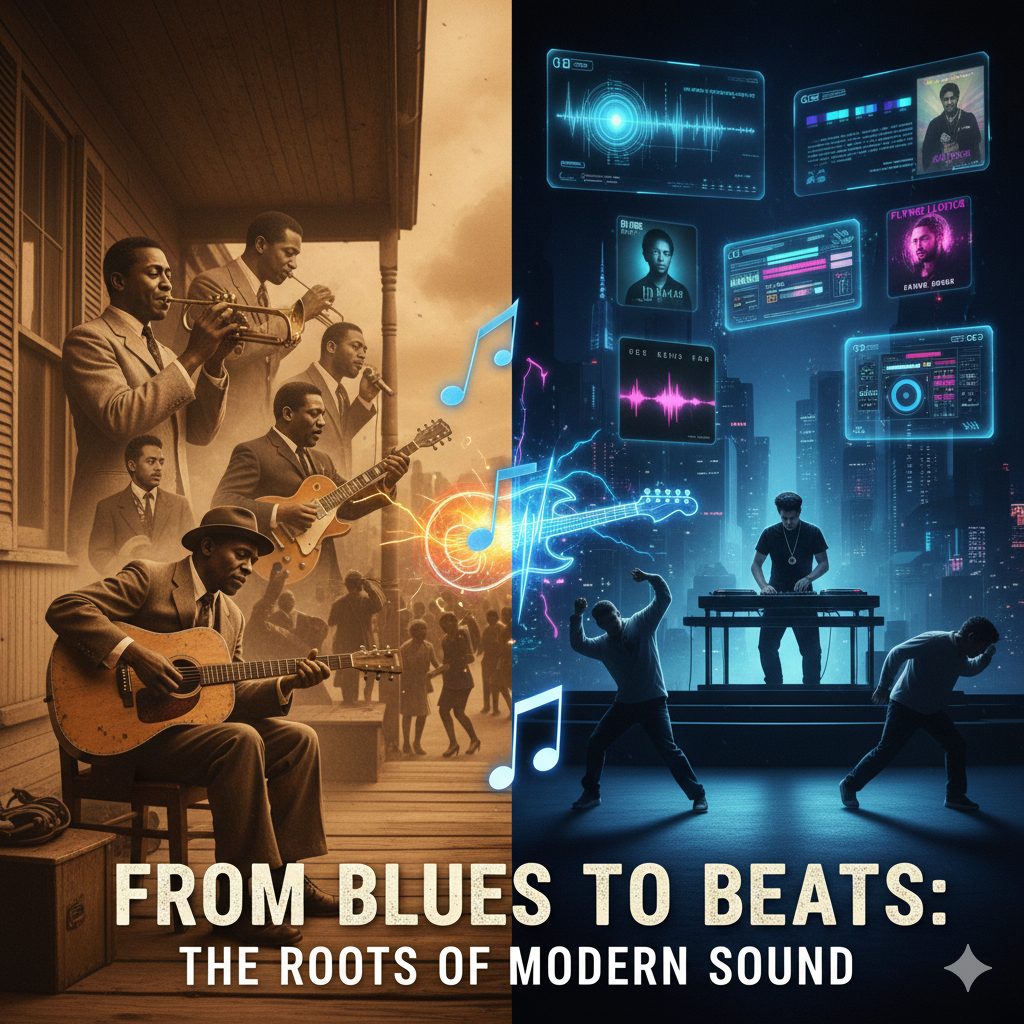
Music is an ever-evolving art form that draws upon its past to create new sounds and genres. One of the most profound influences on contemporary music can be traced back to the deep emotional and cultural roots of the Blues. This genre not only shaped the development of rock, jazz, and R&B, but it also laid the groundwork for modern electronic music and hip-hop beats.
The Legacy of the Blues
The Blues originated in the African American communities of the Deep South in the late 19th century. Emerging from the spirituals, work songs, and folk music of enslaved Africans, the Blues expressed sorrow, resilience, and hope through a distinct musical structure. Featuring expressive guitar work, soulful vocals, and a 12-bar form, the genre became a vehicle for storytelling and emotional expression.
Notable figures such as B.B. King, Muddy Waters, and Howlin’ Wolf paved the way for later musicians by innovating within the genre and incorporating elements that would influence future styles. The raw emotion and improvisational nature of the Blues resonated with audiences, providing a foundation for the next wave of musical evolution.
The Transition to Rock ‘n’ Roll
In the 1950s, the Blues began to merge with other genres, leading to the birth of rock ‘n’ roll. Artists like Chuck Berry and Elvis Presley took the rhythms and slashing guitar riffs of the Blues and combined them with elements of pop and country music. The rebellious spirit of rock ‘n’ roll captivated a generation, and the influence of the Blues persisted, evident in the music of bands like The Rolling Stones and Led Zeppelin.
Jazz and the Birth of Swing
Around the same time, Jazz was also evolving from the Blues, integrating improvisation, complex harmonies, and a sense of swing. Pioneers like Louis Armstrong and Duke Ellington transformed the musical landscape, blending Blues with ragtime and other forms, ultimately giving rise to various Jazz subgenres. The syncopated rhythms and innovative sounds of Jazz further influenced rock and later paved the way for funk and soul.
The Rise of Hip-Hop
As the 20th century progressed, the legacy of the Blues began to manifest in yet another form: hip-hop. Emerging in the late 1970s in the South Bronx, hip-hop incorporated elements of DJing, breakdancing, and graffiti. The powerful narratives found in Blues resonated with hip-hop artists, who utilized storytelling as a means of expression regarding social issues, identity, and struggle.
Sampling became a key component of hip-hop production, often drawing directly from Blues, Jazz, and soul records. The inventive use of drum machines and loops opened new possibilities for sound, resulting in a genre that continuously evolves while respecting its roots. Major artists like The Roots, Nas, and Kendrick Lamar have incorporated elements of Blues into their music, creating a rich tapestry that bridges generations.
The Influence of Electronic Music
Today, Blues’ influence extends into the realm of electronic music. Genres like house, techno, and trap often borrow from the emotive guitar riffs, vocal styles, and rhythmic complexity of the Blues. Artists such as J Dilla and Flying Lotus exemplify the blending of these sounds, creating intricate beats that resonate with both traditional and modern sensibilities.
Conclusion
From the sorrowful strains of the Blues to the infectious beats of modern hip-hop and electronic music, the journey of sound is a testament to the power of cultural expression. Each genre builds upon the last, drawing inspiration from its predecessors while carving out new paths. As we continue to explore the interconnectedness of music, the legacy of the Blues remains a vital thread in the rich tapestry of modern sound, reminding us of the emotions, stories, and experiences that connect us all through music.
About The Author
