
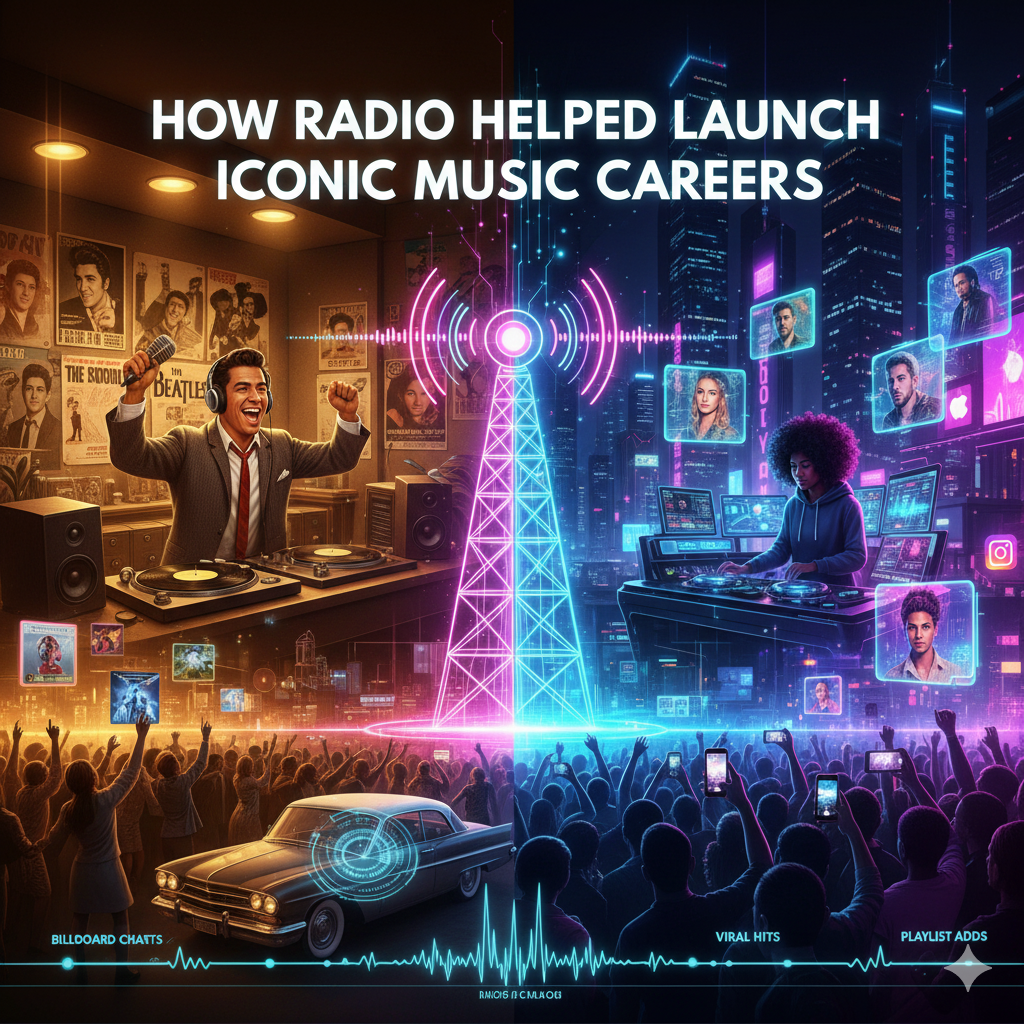
Radio has played a pivotal role in the music industry, serving as a powerful platform for artists to introduce their work to a broad audience. Here are some ways in which radio has helped launch iconic music careers:
1. Exposure to a Wider Audience
- Mass Reach: Radio stations broadcast music to large audiences, helping artists reach listeners far beyond their local scenes.
- Diverse Demographics: Different stations cater to various demographics, allowing artists to connect with specific target audiences.
2. Chart Success
- Billboard and Other Charts: Airplay on popular radio stations can significantly influence an artist’s presence on music charts, such as the Billboard Hot 100, propelling them to recognition and increasing record sales.
3. Breakout Singles
- Hit Singles: Many iconic careers have ascended due to a single song gaining popularity on the radio, leading to breakout success. For instance, artists like Britney Spears and Whitney Houston achieved massive fame through the radio success of their first hits.
4. Playlist Additions
- Rotation on Playlists: Inclusion in regular playlists—especially on top 40 stations—can be crucial. Continuous play helps songs become hits, as audiences grow familiar with the music.
5. Promotional Opportunities
- Interviews and Appearances: Radio stations often host interviews and live sessions, giving emerging artists the opportunity to connect with fans and promote their music directly.
- Contests and Giveaways: Radio promotions often include contests that help artists gain airplay, leading to increased visibility and fan engagement.
6. Support from DJs and Programmers
- Influential DJs: DJs and music programmers often play a critical role in championing new artists, helping them gain traction when they choose to feature particular songs or invite artists for live performances.
- Personal Endorsements: When influential radio personalities endorse songs, it can drive listeners’ interest significantly.
7. Regional Breakthroughs
- Local Radio Stations: Many legendary artists began their journeys on regional radio stations. Local airplay can ignite a following that grows into a wider fanbase.
- Grassroots Movements: Some artists cultivated early careers through grassroots radio listener support, leading to broader recognition.
8. Cultural Impact
- Shaping Trends: Radio not only introduces new music but also sets cultural trends. Genres like rock, hip-hop, and country have all benefited from radio, with iconic stations highlighting specific styles and movements.
9. Online Radio and Streaming
- Modern Platforms: In the digital age, platforms like Spotify and Apple Music often replicate the discovery functions of traditional radio, with curated playlists offering a new avenue for artists to gain exposure much like radio did historically.
10. Legacy and Nostalgia
- Enduring Impact: Many iconic songs and artists from previous decades remain celebrated because of their radio airtime; nostalgia and the enduring presence of classic hits keep these artists’ legacies alive.
Conclusion
The influence of radio on music careers is profound, providing the platform for countless artists to be discovered, celebrated, and immortalized in music history. As technology evolves, radio continues to adapt, maintaining its essential role in shaping the music landscape.
About The Author
