
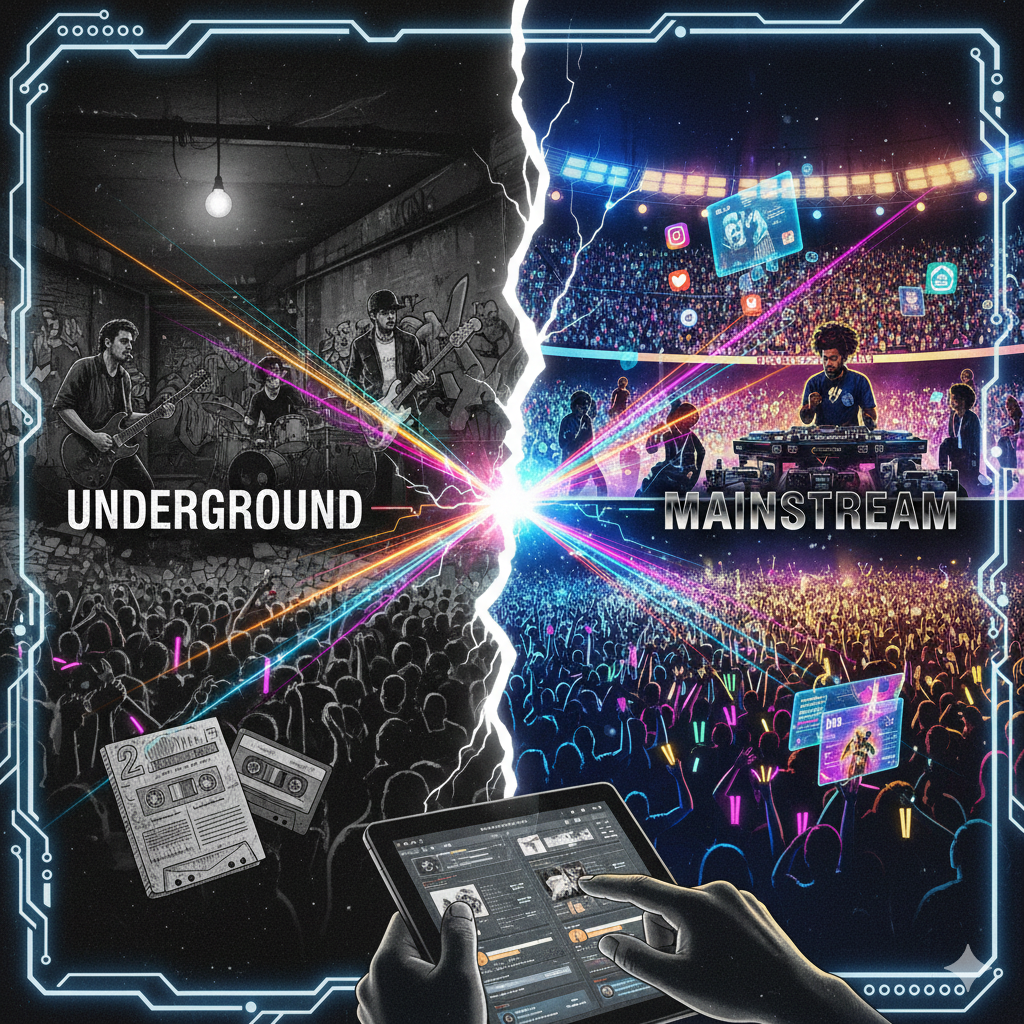
The journey of underground music to mainstream success is a complex and fascinating evolution that reflects changes in technology, culture, and society. Here are some key factors that contributed to this transition over the years:
1. Technological Advancements
- Recording Technology: The advent of affordable recording equipment and the ability to produce high-quality music in home studios allowed underground artists to create and distribute their music without the backing of major labels.
- Digital Distribution: Platforms like Bandcamp, SoundCloud, and now Spotify provided underground artists with venues to share their music directly with listeners, bypassing traditional gatekeepers.
2. Social Media and Online Communities
- Viral Marketing: Social media platforms have enabled artists to gain exposure through organic sharing, leading to viral hits that can thrust underground music into the public eye.
- Fan Engagement: Artists can directly interact with fans, building dedicated followings and creating communities that support their music.
3. Cultural Shifts
- Genre Blending: The rise of genres that mix elements of various styles (e.g., hip-hop merging with punk or electronic) has created new musical landscapes where underground artists can thrive.
- Counterculture Acceptance: As mainstream culture became more eclectic and diverse, previously marginalized genres (like punk, metal, and hip-hop) began to find acceptance, allowing underground artists to penetrate the mainstream.
4. Media Influence
- Blogs and Online Magazines: Independent music blogs and websites often champion underground artists, helping them gain visibility before breaking into mainstream outlets like radio and television.
- Mainstream Collaborations: Established artists often collaborate with underground musicians, lending credibility to their work and introducing them to a broader audience.
5. Festivals and Live Performances
- Showcasing: Music festivals often highlight underground acts, giving them a platform to reach larger audiences while drawing attention from industry professionals and media.
- Grassroots Movements: Local scenes and DIY shows foster a sense of community and support, helping underground acts to gain traction over time.
6. Commercialization and Branding
- Niche Markets: Major labels and brands recognizing the potential of underground sounds have started signing these artists, leveraging their unique styles for marketing purposes.
- Crossover Hits: Some underground artists have produced songs that resonate with mainstream audiences, often leading to remixes and adaptations that further blend the lines between underground and mainstream.
7. Changing Music Consumption Habits
- Streaming Services: The way people consume music has shifted dramatically toward streaming, which can favor a diverse array of artists and genres, allowing less commercialized sounds to thrive.
- Curated Playlists: Many streaming platforms curate playlists that feature underground and independent artists, leading to increased exposure.
Conclusion
The transition of underground music into the mainstream is a reflection of broader social, technological, and cultural shifts. While the journey can often dilute the original intent or sound of underground music, it also provides opportunities for diverse voices to reach wider audiences. The landscape continues to evolve, and the interplay between underground and mainstream will likely remain dynamic and transformative.
About The Author
