
Throughout the history of music, radio has played a pivotal role in shaping popular culture, introducing new genres, and creating legendary moments. Here are some iconic radio moments that significantly impacted music history:
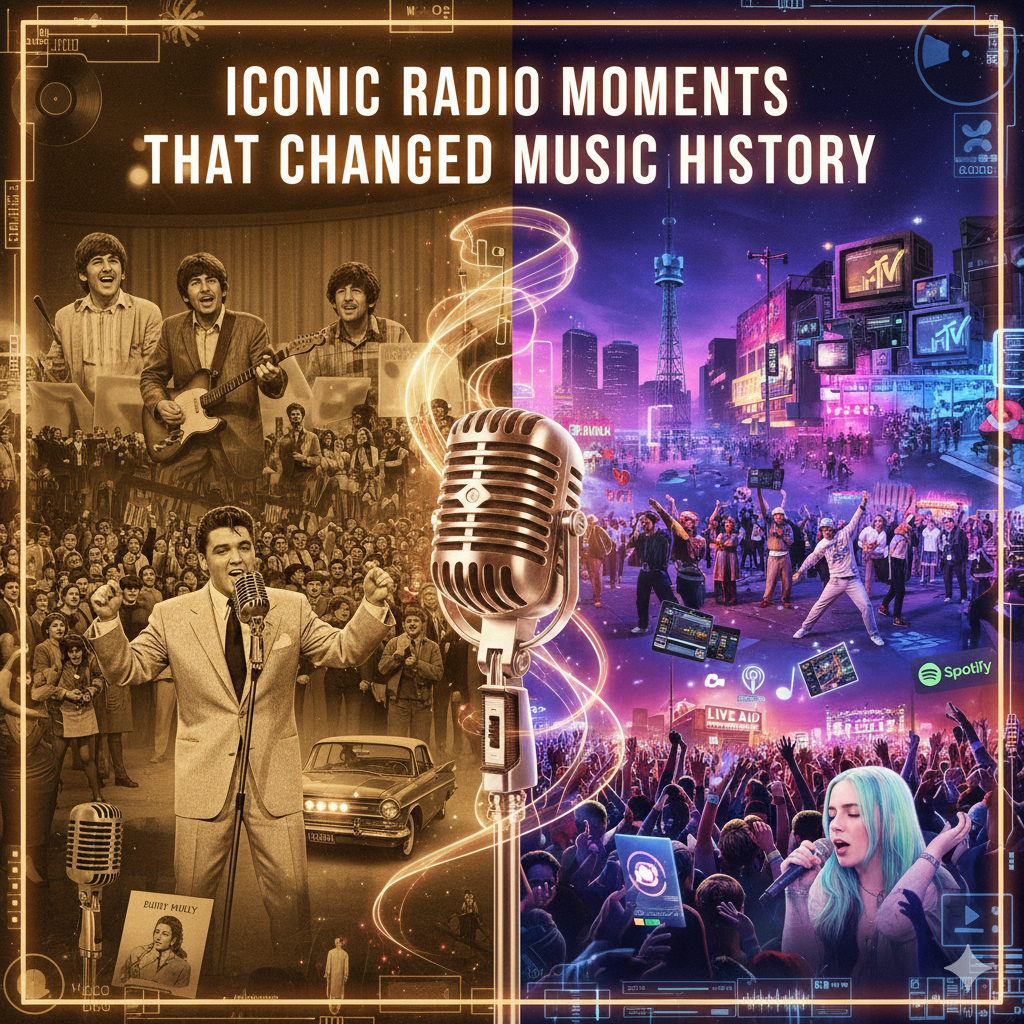
- Elvis Presley’s Debut on The Ed Sullivan Show (1956): While technically television, this moment became a cultural phenomenon primarily amplified by radio. The immense buzz in the media and public’s embrace of Elvis, fueled by airplay, helped propel rock ‘n’ roll into the mainstream.
- The First British Invasion (1964): The Beatles’ appearance on “The Ed Sullivan Show” was hugely publicized on radio, but radio airplay of their singles like “I Want to Hold Your Hand” played a crucial role in their rise to fame in America. This period marked a significant shift in music trends and consumer tastes.
- Bob Dylan Goes Electric (1965): At the Newport Folk Festival, Bob Dylan famously “went electric,” performing with a full band. The backlash from folk purists was significant, but radio coverage of the event helped solidify Dylan’s role as a revolutionary artist and the changing landscape of popular music.
- The Advent of FM Radio (1960s): The transition from AM to FM radio allowed for better sound quality and the emergence of new genres like progressive rock. It opened the airwaves for artists like Pink Floyd and The Doors, who thrived in the FM format.
- The “Day the Music Died” (1959): The tragic plane crash that killed Buddy Holly, Ritchie Valens, and J.P. “The Big Bopper” Richardson marked a somber moment in music history. Radio stations around the country paid tribute, highlighting the impact these artists had on rock ‘n’ roll.
- WABC’s “Total Discussion” (1970s): This New York City radio station was one of the first to embrace talk radio, discussing contemporary music and artists. This approach led to deeper connections between stars and their fans, making radio an essential medium for music discussion.
- The Launch of MTV (1981): While primarily a television network, the launch of MTV revolutionized how music was marketed and consumed. However, radio was still essential as the primary means through which new artists were introduced to audiences, paving the way for the visual medium’s rise.
- Live Aid (1985): Radio coverage of the global concert event raised over $125 million for famine relief in Ethiopia. The event was broadcast worldwide, allowing audiences to engage with music in a way that combined entertainment and activism.
- The Rise of Rap and Hip-Hop (1980s and 1990s): Stations like WBLS and Hot 97 in New York City helped elevate hip-hop from underground movement to mainstream success. Gaining airtime was crucial for artists like Run-D.M.C., Public Enemy, and The Notorious B.I.G.
- Howard Stern’s Impact on Music (1990s-2000s): The shock jock’s influence extended to music as he provided a platform for artists like Nirvana and Rage Against the Machine. His interviews and live performances on the radio became iconic moments in music history.
- Internet Radio and Podcasting (2000s): The rise of internet radio platforms and podcasts has allowed for a democratization of music distribution and a platform for diverse voices. Artists today like Billie Eilish gained substantial early exposure through streaming and digital radio.
- The 2020s Resurgence of Vinyl and Radio: In recent years, many young artists have embraced radio again as a means to reach a wider audience, combining traditional formats with streaming platforms. This resurgence has redefined community engagement with music and introduced vintage sounds to new generations.
These moments illustrate how radio has been a powerful medium for music discovery, cultural shifts, and social change, influencing the way music is created, distributed, and consumed.
About The Author
