
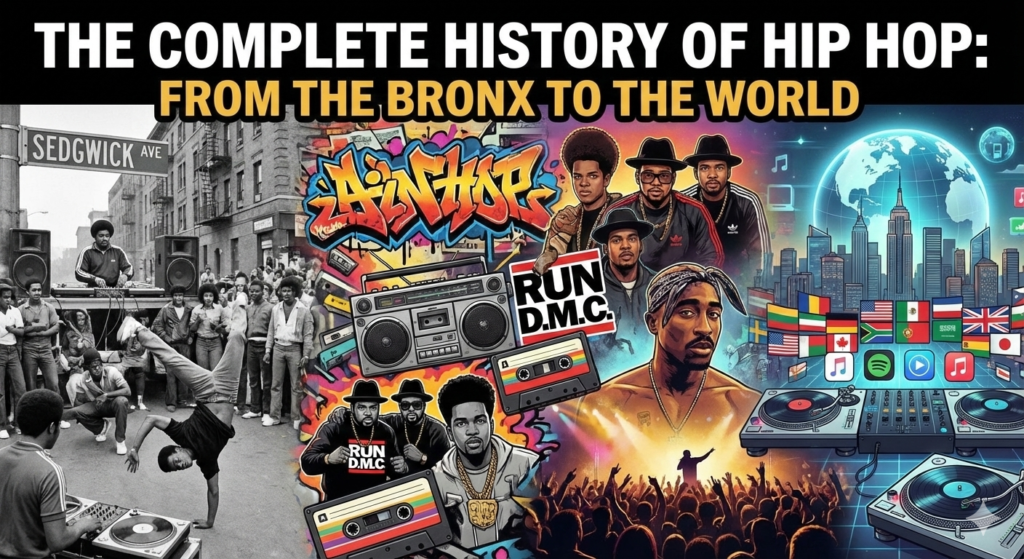
Origins in the Bronx (1970s)
Hip hop culture emerged in the Bronx, New York City, in the early 1970s. It was born from a confluence of various musical styles and socio-political factors. The genre’s foundational elements include:
- DJing: Pioneers like DJ Kool Herc played a vital role by manipulating records during block parties, extending breaks to keep dance floors lively. Herc’s innovative use of turntables set the stage for hip hop music.
- MCing: As DJs would play music, MCs (rappers) began to speak over the beats, initially as a way to hype up the crowd. Early MCs like Coke La Rock made history with their improvisational rhymes.
- Breakdancing: In tandem with the music, breakdancing (or b-boying) became a significant aspect of hip hop culture. It was characterized by dynamic physical movements and showcased incredible athleticism.
- Graffiti Art: Street art emerged as a visual representation of hip hop culture. Artists like Phase 2 and Taki 183 used walls as canvases to express their identity and social commentary.
Rise of Hip Hop (1980s)
The late 1970s to the 1980s marked the popularization of hip hop:
- The First Records: In 1979, the Sugarhill Gang released “Rapper’s Delight,” the first hip hop single to gain mainstream success. This track introduced hip hop to a broader audience and achieved commercial success.
- Diversification of Sound: Artists began to experiment with diverse sounds. Grandmaster Flash’s “The Message” (1982) brought social issues and storytelling to the forefront of hip hop.
- Establishment of Labels: Record labels like Def Jam were founded, supporting artists and bringing hip hop music to a larger audience. Artists like Run-D.M.C. and LL Cool J became household names.
Mainstream Acceptance (1990s)
The 1990s saw hip hop’s emergence as a dominant force in music and culture:
- Golden Age of Hip Hop: This period introduced iconic artists like Tupac Shakur, The Notorious B.I.G., Nas, and A Tribe Called Quest. The lyrical complexity and production techniques advanced significantly during this time.
- Regional Sounds: While New York continued to be a hub for hip hop, the West Coast scene emerged with distinctive sounds led by artists like Dr. Dre and Snoop Dogg. The South also began to develop its own unique styles, with artists like OutKast leading the charge.
- Social Issues: The genre began to address issues like racism, inequality, and violence. This was particularly evident in the rivalry between East Coast and West Coast artists, culminating in tragic events like the murders of Tupac and Biggie.
Global Expansion (2000s)
As the 21st century arrived, hip hop continued to evolve and expand globally:
- Commercial Dominance: Hip hop became one of the most profitable genres of music. Artists like Jay-Z, 50 Cent, and Eminem topped charts and became cultural icons.
- International Influence: Hip hop began to resonate worldwide, birthing regional scenes like UK grime, French rap, and Japanese hip hop, integrating local languages and sounds.
- Diverse Voices: Female rappers like Missy Elliott and Nicki Minaj, as well as LGBTQ+ artists, began to receive recognition, further diversifying the genre.
Digital Age and Modern Day (2010s-Present)
The rise of social media and streaming services has transformed how hip hop is consumed and created:
- Emergence of New Platforms: Artists now use platforms such as YouTube and SoundCloud to distribute music directly to fans, enabling independent artists to thrive without major label support.
- Genre Fusion: Hip hop has increasingly blended with other genres such as pop, rock, and electronic music, resulting in collaborations with mainstream artists. Artists like Lil Nas X and Post Malone exemplify this trend.
- Cultural Impact: Hip hop has influenced fashion, language, and art globally. Its themes of resilience, identity, and empowerment continue to resonate with audiences around the world.
Conclusion
From its humble beginnings in the Bronx to its role as a global cultural phenomenon, hip hop has transcended music to become a powerful form of expression. Today, it continues to evolve and respond to the ever-changing landscape of society, shaping and reflecting the experiences of people around the world. As it moves forward, hip hop remains a vital voice in contemporary culture, leveraging its rich history to inform present and future generations.
About The Author
