
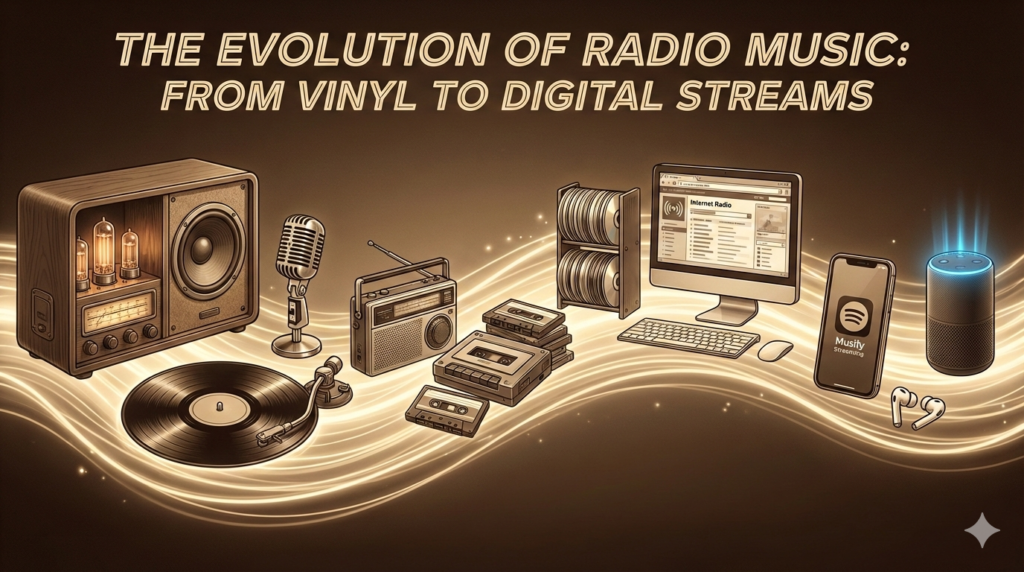
The evolution of radio music from vinyl to digital streams is a fascinating journey that reflects significant technological advancements, changing consumer preferences, and the musical landscape’s evolving nature. Here’s a comprehensive overview of that evolution:
1. The Birth of Radio (1920s)
- Early Broadcasts: Radio music began in the early 1920s, with stations starting to broadcast music over airwaves. Initially, music was played live by orchestras and artists.
- Vinyl Records: The introduction of vinyl records in the late 1940s provided a reliable medium for recording and playback, allowing radio stations to play pre-recorded music.
2. The Golden Age of Radio (1930s-1950s)
- Variety Shows: Stations hosted live variety shows and concerts, featuring popular artists of the time. Music genres like jazz, swing, and later rock and roll gained popularity.
- Transistor Radios: The advent of transistor radios in the 1950s made radio more portable, expanding its reach and accessibility.
3. The Decline of Vinyl and the Rise of Cassette Tapes (1960s-1970s)
- Top 40 Format: Radio adapted to the changing music industry, embracing the Top 40 format that emphasized the most popular songs of the week.
- Cassettes and the Walkman: The emergence of cassette tapes and players like the Sony Walkman in the late 1970s allowed listeners to enjoy music on-the-go, impacting radio listenership.
4. The LP Era and FM Radio (1970s-1980s)
- Album-Oriented Rock (AOR): FM radio became popular due to its higher fidelity and ability to play album tracks in addition to singles, aligning with the longer format of LPs.
- Formats and Personalization: Radio stations began to differentiate themselves with specific formats (rock, country, top 40) and DJs became influential in introducing new music.
5. The Digital Age Begins (1990s-2000s)
- CDs and Digital Formats: The rise of compact discs (CDs) offered superior sound quality and convenience, changing how music was recorded, distributed, and played.
- Internet Radio: With the advent of the internet, platforms like Pandora and iTunes Radio began to emerge, offering streaming music options and personalized playlists.
6. The Streaming Revolution (2000s-Present)
- On-Demand Music: The popularity of services such as Spotify, Apple Music, and YouTube shifted the music consumption model from ownership (buying CDs or downloads) to access (streaming).
- Podcasts and Radio Reimagined: Traditional radio began to incorporate podcasts and on-demand content, blurring the lines between radio broadcasts and streaming services.
- Smart Devices: Voice-activated devices and smart speakers further transformed how people accessed music, allowing them to stream radio stations or playlists effortlessly.
7. Current Trends and Challenges
- Personalization and Algorithms: AI-driven algorithms curate music recommendations at an unprecedented level, tailoring experiences to individual listeners.
- Shift in Airplay Rules: The music industry has had to adapt to changing airplay regulations, digital royalties, and the significance of social media platforms as music discovery tools.
- Challenges for Traditional Radio: Radio faces challenges in retaining listeners as streaming services offer convenience and personalized experiences.
Conclusion
The journey from vinyl to digital streams illustrates a broader transition in media consumption, technological advancements, and shifts in cultural consumption patterns. While traditional radio has seen a decline in certain areas, it continues to adapt by embracing new technologies and formats, proving that the desire for music and connection through audio remains strong. The future of radio music will likely continue to evolve alongside emerging technologies, ensuring its relevance in a diverse and rapidly changing landscape.
About The Author
